

What is SEO?
SEO is one of the most important pieces of having a strong online presence, but what is it? SEO stands for Search Engine Optimization and it is the process of improving or optimizing a website to increase its visibility in relevant organic (non-paid) search results on major search engines.
To be able to fully optimize a website for these search engines, you first have to understand your audience. Who are they? What is their intent? What are they searching for? What keywords are they using in their search? What types of content are they seeking?
Once you know this information, you can work on the second step: providing the appropriate content and delivering it in a way that search engines find relevant.
How Does it Work?
Search engines, such as Google and Bing, will “crawl” a website to determine the relevance and quality of its content. Crawling simply means reading the content on a website to ultimately decide whether or not to show the website in the search engine results based on the keywords that are found.
To determine overall relevance, search engines compute a number of relevance scores using multiple different page elements. These elements include the title tag, meta description, incoming anchor text, and/or any other content or elements that relate to the queries or keywords being searched. These multiple relevance scores are then weighed to come up with one final score. This final relevance score will help determine how a page is ranked on the search engine results page.
A website’s quality is determined by a variety of factors, such as number and quality of backlinks (links from other sources that lead to your website), amount of unique content, and ease of use of the website such as load times and mobile friendliness.
Another key factor that is taken into account is how users engage with a website. Are they staying on the site for a while and clicking through to other pages? Or are they immediately bouncing off of the site and back to the search engine results page? When you start to dive into some of these metrics, you can begin to search for what might be causing users to have a low interaction rate. Once you know the “why”, you can begin to optimize using the appropriate techniques.
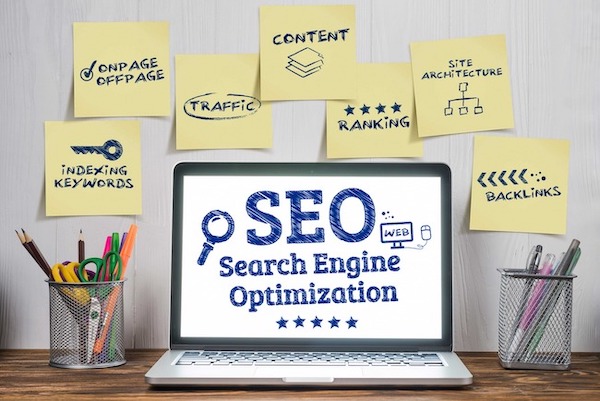
How To Optimize Your Website
Keyword Research
To begin the website optimization journey, you need to have a solid foundation of keywords to create relevant content around. In order to build a good list of keywords, you need to understand what is being searched most in your industry. There could be a trending topic, or a common problem that users are searching. Whatever it may be, determine what is important to consumers in your industry so you are able to provide the content they are searching for. A couple of good tools to use to help gage search volume and popularity are Google’s Keyword Planner (you will need an Ads account for this) and Google Trends.
Performing keyword research regularly will also help generate ideas for new content. It’s always a good idea to add fresh content to a website on a regular basis, and we know it can sometimes be tough to come up with content ideas. Instead of blindly picking a topic to write about, why not find out what consumers are searching for and provide answers for them? That sounds like it might just make life a little easier, and attract more customers in the process.
Content Creation
Now that you know what search keywords you want to show up for, it’s time to build some content. The content must contain the keywords you are trying to target, however that doesn’t mean you should load one page full of keywords that don’t make any sense together.
Each page should have a main topic, or keyword, that it is centered around. An example would be if a pet store found that at the beginning of Summer, searches for pet grooming and pet boarding went up drastically. Since they offer both of these services, they would want to put more information on their website to support these searches. They should create a focused page about pet grooming with supporting keywords being the different pets they work with, and a separate page outlining their pet boarding service. This will help search engines determine relevance of a single page, to then decide which page best suits each search.
Link Building
Search engines base website quality and relevance largely on inbound website links, which are links that come from other websites or a different domain name. Therefore, it is incredibly important to have high quality links to your website. The best way to do this is to first create content that consumers need or find to be important, interesting, etc. This is where the keyword research will come in handy. Yes, the goal here is to get the consumer to view the content, but we also want them to find the content so useful that they create their own links to the website.
After the content has been created, you now need to promote it using the appropriate marketing channels. In doing this, you are gaining more traffic to your website and increasing the likelihood that these sources will directly link to your website.
Technical Optimization
As mentioned before, website speed and user-friendliness is a key part of optimizing a website. If web pages have a long load time or maybe aren’t optimized for the particular device being used, consumers will be more likely to bounce off of the website and seek a different listing. If this becomes a trend, the search engines will note that the website’s quality is low and may not show that particular website in search engine results, regardless of the content throughout the site.
Fortunately, Google has a couple useful tools to help test the quality of a website and provide guidance for how to address potential issues. The first is testing website speed to inform you of what could be causing long load times, and the second tests how mobile friendly a website is. Both of these will provide great insight into how user friendly a website is, as well as tips to fix any potential issues.
So…Why is SEO Important?
Let’s summarize. People search for things every day. If you want to be seen, you need to show up for these searches. If you want to show up for the searches, you need to provide quality content to address the searches taking place as well as ensuring that your website is user friendly. If you have not mastered those two key factors, your pages will not show up on search engine results pages.
Need a little more help? That’s what we’re here for! Contact Shout It Out Design so we can learn more about your business and how to help it thrive.